Ask three companies to build the same website and you’ll get three wildly different numbers. One quotes you SGD 800. The next says SGD 6,000. A third hands you a proposal for SGD 18,000 and sounds just as confident. So what does a fair web design cost in Singapore actually look like, and why is the gap so huge?
In 2026, the real spread runs from roughly SGD 800 for a basic freelancer build to SGD 30,000+ for a custom corporate or e-commerce site. That spread isn’t random. It tracks four choices you control: who you hire, how many pages you need, how custom the design is, and what the site has to do.
Plenty of owners aren’t starting from zero, though. You may already have a site that looks dated or never brings in enquiries, and your real question is whether to redesign it or start over. Either way, the build is only the first bill. What you spend after launch decides whether anyone finds your site and books.
This guide covers all of it, with prices checked against Singapore’s leading price guides and official grant rules in September 2026.
You’ll see the real ranges, the four factors that move your number, what a redesign costs next to a new build, whether AI can replace paying, and the ongoing costs that turn a website into bookings. The goal is simple: match your budget to the result you need, not to the cheapest quote or the priciest.
Web Design Cost in Singapore at a Glance (2026)
How much does web design cost in Singapore?
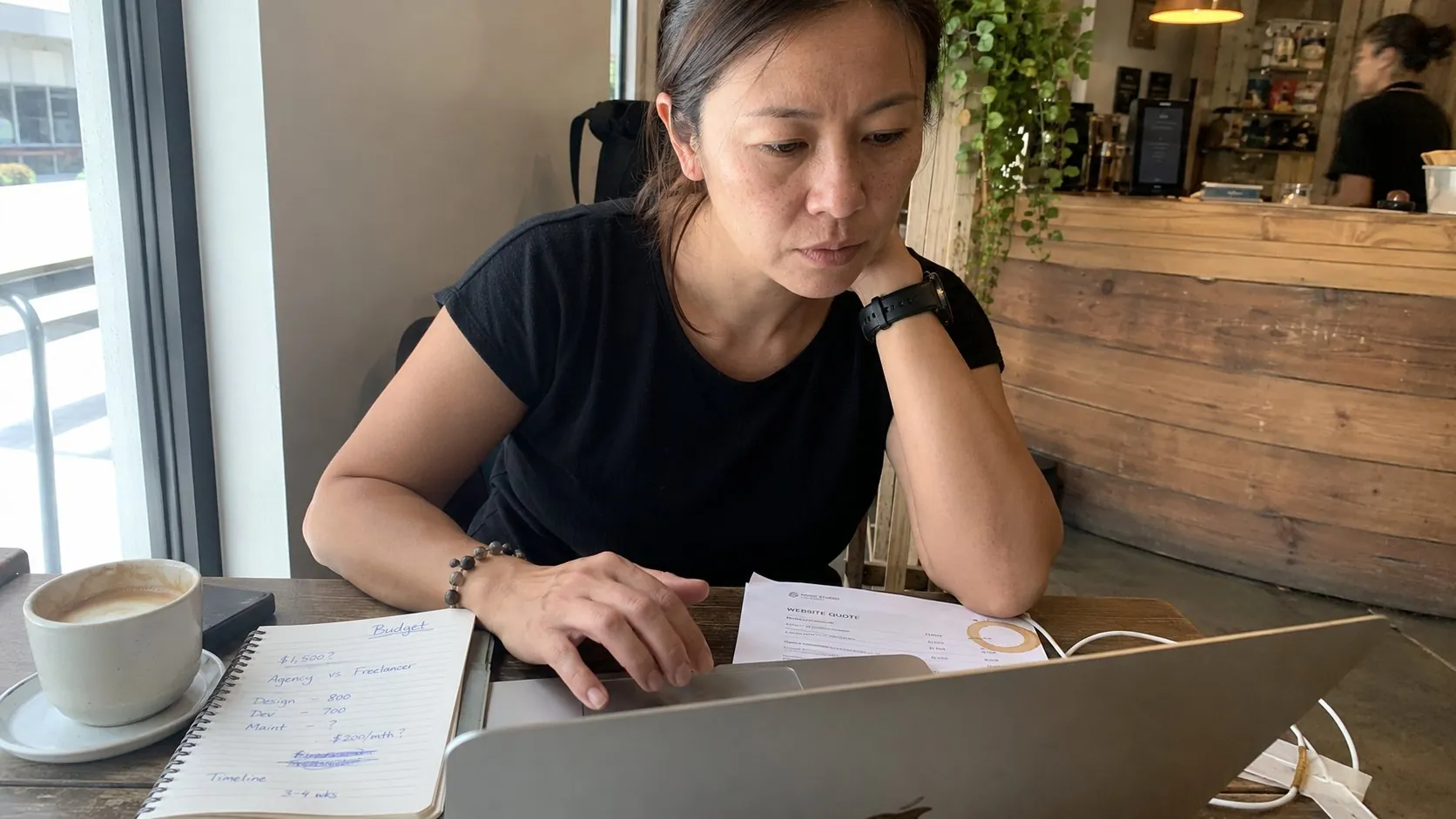
Most professional websites in Singapore cost between SGD 1,500 and SGD 20,000, with the full market running from about SGD 500 for a DIY or template build to over SGD 30,000 for a fully custom site. That gap looks wild until you see what drives it: four controllable factors we’ll unpack right after this snapshot.
Cost by provider: freelancer vs agency
Who builds your site is the single biggest swing on price. Here’s what web designers typically charge in Singapore.
| Provider | Typical cost | Best for |
|---|---|---|
| DIY builder (Wix, Squarespace) | ~SGD 200–800/yr | A micro-business or testing an idea |
| Freelancer | ~SGD 500–8,000 (or SGD 25–120/hr) | Small sites with a defined scope |
| Local agency | ~SGD 5,000–25,000+ | Full-service, corporate, scalable builds |
Website design price in Singapore by site type
The more your site has to do, the more it costs to build. These are typical ranges by site type.
| Website type | Typical cost |
|---|---|
| Basic / small business (5–10 pages) | SGD 1,500–6,000 |
| Corporate site | SGD 6,000–15,000 |
| E-commerce store | SGD 8,000–30,000 |
| Custom web app / membership | SGD 15,000–60,000+ |
A 20-page site usually lands in the corporate range, roughly SGD 6,000–15,000, since page count drives design and build hours more than almost any single feature.
How much does a 5-page website cost?
A template build with a contact form can start under SGD 1,000. A professionally designed 5-page site, with custom layouts and basic SEO set up, usually lands in the SGD 1,500–6,000 band above. For most small businesses, that’s the sweet spot: enough pages to explain your services, without paying for a corporate build.
Not sure which band your business fits? Book a 1:1 discovery call and we’ll help you size the project before you collect quotes. No lock-in, no pressure.
What Drives Web Design Cost in Singapore? The Four Factors
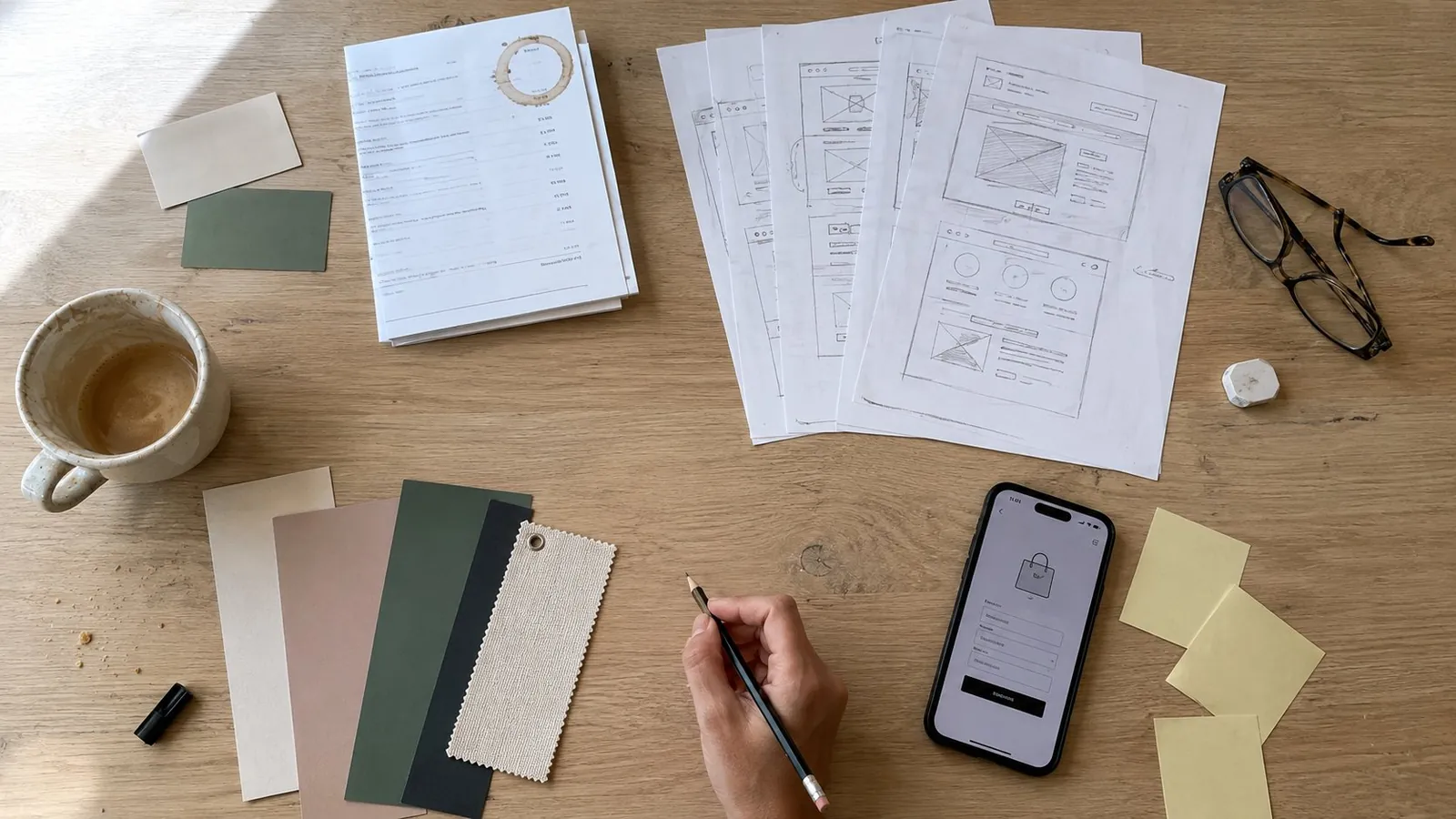
Every range above traces back to the same four levers. Each one is a choice you make, and each choice moves your Singapore web design price up or down.
Factor 1: Who you hire
This is the biggest swing on price, and it’s really a trade-off. A lower price often means less accountability, less process, and less help after launch. A cheap freelancer might build a lovely site, then go quiet the day something breaks.
An agency costs more because you’re also paying for a process, a team, and someone who picks up the phone six months later.
| Freelancer | Local agency | |
|---|---|---|
| After-launch support | Often limited | Ongoing and structured |
| Accountability | Single point of contact | Dedicated PM and team |
| Best when | Scope is small and defined | You need scale and reliability |
There’s a second choice inside this one: local versus overseas. An overseas team can quote far less, but you trade away easy communication and shared time zones. A Singapore-based builder also understands PDPA, the country’s data-protection law. Send customer data offshore without a plan, and you take on real risk to save a little money.
Factor 2: Number of pages and content
This one is simple maths. More pages mean more hours of design, building, and writing, and hours are what you pay for. A tidy five-page brochure site is quick to produce. A thirty-page site with service pages, location pages, and a resource library is a different beast.
Then there’s the content itself. Many quotes assume you’ll hand over finished words and photos. If you can’t, copywriting gets billed on top, typically SGD 100–300 per page, plus photography. So ask every provider one question: is content included, or extra? A SGD 4,000 build with copywriting bundled in can beat a SGD 3,000 build where you still owe a writer.
Factor 3: Level of customisation
Design comes in three broad tiers, each at a different price point.
| Customisation level | What it is | Relative cost |
|---|---|---|
| Template | Pre-built layout, fast to deploy | Lowest |
| Semi-custom | Template adjusted to your brand | Moderate |
| Fully custom | Built from scratch to your needs | Highest (custom design typically adds SGD 2,000–8,000) |
A template launches fast and cheap, but it can look like every competitor using the same one.
Custom design costs more because it buys what a template can’t: a look that fits your brand, a layout shaped around how your visitors behave, and pages built to turn clicks into enquiries. In a crowded Singapore market, that’s often where the money is best spent.
Factor 4: Functionality and integrations
Every feature you add is more to build and test, so each one nudges the price up. A booking system, a payment gateway like PayNow or Stripe, a CRM that captures leads, a members-only portal: these all add hours. Connecting a more complex system can add SGD 500–3,000+ on its own.
The platform is a cost lever too. WordPress is flexible and budget-friendly for most small businesses. Webflow suits design-led brands. A fully custom framework gives total control but costs the most to build and maintain. Match features to what you need today, not extras you might use someday.
Provider, pages, customisation, and functionality explain almost every quote you’ll get, and you control all four.
Website Redesign Cost in Singapore vs a New Build
Not every business needs a new website. If you already have one, a redesign may get you most of the result for less. The trick is knowing which job you actually have.
Do you need a redesign or a new website?
A website redesign keeps what’s working on your current site and fixes the rest: the design, speed, mobile layout, and structure. It usually makes sense when your content is decent and some pages already rank on Google. A new build makes more sense when the platform is outdated, or when the site can’t support what your business needs now.
These signs usually mean a website redesign is due:
- Pages load slowly, and visitors leave before they finish
- The site wasn’t built for phones
- Every small change needs a developer
- It looks dated next to your competitors
- Traffic looks fine, but enquiries have dropped
- It describes the business you were, not the one you are now
Can AI redesign your existing website? AI tools can suggest layouts and draft new copy quickly. They can’t decide what to keep, move your content safely, or protect your rankings. That part still needs a person.
What a redesign actually costs in Singapore
Here’s the honest answer: Singapore providers don’t publish standard redesign prices. A redesign is quoted on the same four levers as a new build, scaled to how much gets reused versus rebuilt. A light refresh of a small site costs far less than rebuilding a 30-page corporate site.
Two numbers help you plan. If the redesign includes fully custom design, budget for that SGD 2,000–8,000 layer from Factor 3. And most redesigns take 3 to 6 weeks from kickoff to launch, while a full content rebuild can take 6 to 10.
A proper redesign quote should also list work a new build doesn’t need:
- An audit of your current site and what to keep
- Content migration from the old site to the new one
- Redirect mapping from old page addresses to new ones
- A pre-launch SEO and tracking check
If a quote skips these, it’s cheaper for a reason.
How to redesign a website without losing SEO
A careless redesign can wipe out years of search visibility overnight. When page addresses change without redirects, Google loses track of the pages that used to rank. Visitors hit error pages, and your enquiries quietly drop.
To protect your rankings, keep the addresses of pages that already rank wherever you can. Redirect every address that has to change. Then check rankings and tracking before and after the switch. Done right, a redesign should lift your results, not reset them to zero.
Thinking about a redesign but not sure it’s worth it? Book a 1:1 discovery call and we’ll look at your current site with you and tell you honestly whether a refresh, a redesign, or a rebuild fits.
Can’t I Just Use AI to Build My Website for Free?
It’s the fairest question in the market right now. AI website builders promise a finished site in an afternoon for almost nothing. So before you spend a dollar, be honest about where they win and where they quietly let you down.
The short answer: yes, AI tools like ChatGPT can help build a working website, and for a simple site they do it well. It usually costs about the same as the DIY builder subscription in the table above. What AI struggles with is everything that happens after launch.
Where AI and DIY builders genuinely work
For some businesses, an AI or DIY builder is the right call. If you need a simple online presence, a portfolio, or a way to test an idea, these tools are fast and cheap. They get you live in hours instead of weeks.
If your goal is just to exist online, paying thousands makes little sense. A basic need calls for a basic, low-cost tool. No shame in that.
Where they break, and what a professional adds
| AI / template build | Professional build | |
|---|---|---|
| Time to launch | Hours to days | Weeks |
| Upfront cost | Lowest | Higher |
| SEO & AI-search visibility | Weak by default | Built in |
| Conversion-focused design | Rare | Standard |
| Looks distinct from competitors | Often no | Yes |
| Support when something breaks | You’re on your own | Included |
The trouble shows up after launch. Menus link to nowhere. A hidden setting called robots.txt tells Google to stay away, so you never get found. And because everyone uses the same templates, your site looks like a hundred others.
Most of all, these builds are usually weak at SEO and at being found on AI answer engines like ChatGPT and Google’s AI Overviews. Those are the channels reshaping how customers find businesses in 2026.
So is AI replacing web design? Not yet. It speeds up the build, but it doesn’t plan what your site should say, who it’s for, or how it turns visitors into bookings. That’s where paying earns its keep, and it’s why the costs after launch matter as much as the build.
After Launch: What It Costs to Get Found and Booked
The build is a one-off bill. What happens after launch decides whether the site pays you back. A beautiful website nobody finds is an expensive business card. So budget for three things: keeping it live, getting it found, and turning local searches into bookings.
Keeping it live
These are the yearly lines most owners forget to budget for.
| Ongoing item | Typical cost |
|---|---|
| Domain name | ~SGD 15–50/yr |
| Hosting | ~SGD 100–600/yr |
| Maintenance & security | ~SGD 300–2,000/yr (or a monthly retainer) |
| Automated off-site backups | ~SGD 50–200/yr |
If you’d rather not handle updates and security yourself, a support plan rolls maintenance into a predictable monthly fee. One small relief: an SSL certificate (the padlock that keeps your site secure) usually comes bundled with web hosting, so it’s rarely a separate charge.
How much does SEO cost after launch?
A new site doesn’t rank on its own. Plan on SGD 500–3,000 for a one-time SEO setup, covering keyword research, on-page optimisation, and technical setup. Ongoing SEO usually runs SGD 300–2,000 a month for fresh content, link building, and reporting.
There’s now a second half to being found. GEO, or generative engine optimisation, means structuring your content so tools like ChatGPT and Google’s AI Overviews can understand it and cite you. Some customers now ask an AI tool for a recommendation before they ever search Google. If your site isn’t set up for both, you’re missing part of your market.
Content that keeps you visible
Search engines and AI tools favour sites that stay active. A site that never changes after launch slowly slips down the results. That’s why ongoing content matters: blog articles that answer your customers’ real questions, plus social posts that point people back to your site.
At SGD 100–300 per page for professional copywriting, you don’t need a big budget. A steady rhythm, such as one or two useful articles a month, keeps your site fresh and gives both Google and AI tools something new to find.
Google Business Profile: the bridge from search to bookings
When someone nearby searches for what you sell, Google often shows a map and a list of local businesses first. Those listings come from Google Business Profile. Creating a Google Business Profile is free; the real cost is the time to set it up properly and keep it active.
Your profile and your website work as a team. The profile wins the local search with your reviews, photos, hours, and location. Your website then closes the deal with your services, your prices, and a clear booking button.
A strong profile that links to a slow or confusing site loses the booking at the last step. A great site with no profile misses the people searching nearby.
So treat them as one system:
- Keep your profile’s name, hours, and services matching your website.
- Link the profile to the page where people book, not just your homepage.
- Post updates and ask happy customers for reviews.
That’s how a local search becomes a booking.
How to Lower the Cost (Without Buying a Site That Can’t Work)
Spending less is smart. Spending so little that the site can’t do its job is not. Here’s how to bring the cost down and still get something that works.
Can a government grant pay for your website?
Sometimes, and it’s real money many owners leave on the table. The Productivity Solutions Grant (PSG) covers up to 50% of eligible costs, capped at SGD 30,000 per company, for pre-approved digital solutions. It’s run by Enterprise Singapore, and that support can turn an out-of-reach quote into an easy yes.
There are catches worth knowing before you plan around it:
- Only pre-approved solutions qualify. Check that your project and vendor are on the GoBusiness list first.
- Apply before you pay anything. Any payment or deposit made before you submit rules the project out.
- Your business must qualify. You need to be registered and operating in Singapore, with at least 30% local shareholding. Your group turnover must be under SGD 100 million, or your headcount under 200.
What about the Enterprise Development Grant (EDG)? It funds larger growth projects, but it specifically excludes websites, SEO, and marketing campaigns. So don’t count on it for a build or a redesign. Rules change, so confirm your eligibility on the official Enterprise Singapore PSG page.
Smart budgeting and how to spot red flags
The pros do one thing first: they decide what the website must do before asking for prices. List your must-have pages and features, then get three itemised quotes that break out each cost line. Now you can compare scope, not just the bottom number. A higher quote that includes copywriting and SEO may beat a lower one that includes neither.
While you compare, watch for warning signs:
- A sub-SGD 1,000 “complete” website, usually too cheap to work
- Vague quotes with no itemised breakdown
- A redesign quote with no mention of redirects or content migration
- Pressure tactics or “today only” discounts
- No portfolio or past work you can actually look at
Steer clear of those, and you protect yourself from the false economy of a site that can’t deliver.
Frequently Asked Questions
What is a reasonable price for website design in Singapore?
A reasonable price depends on the job. A simple brochure site runs SGD 1,500–6,000, a corporate site SGD 6,000–15,000, and e-commerce SGD 8,000–30,000. Match your budget to what the site must do, not to the cheapest quote.
What is the cost of website design in Singapore in 2026?
Most professional websites cost SGD 1,500–20,000. The full market spans about SGD 500 for a DIY build to over SGD 30,000 for a fully custom site. Provider, page count, customisation, and functionality set the final figure.
What is the average cost of a 5-page website in Singapore?
A template-based 5-page site can start under SGD 1,000. A professionally designed 5-page site, with custom layouts and basic SEO, usually costs SGD 1,500–6,000.
How much does a 20-page website cost?
A 20-page site usually falls in the corporate range, roughly SGD 6,000–15,000. Page count drives design and build hours more than almost any single feature.
How much does it cost to redesign a website in Singapore?
There’s no standard published price. A redesign is quoted on the same four factors as a new build, scaled to how much is reused. Most take 3 to 6 weeks, and a good quote includes content migration and redirects.
How much does SEO cost after my website launches?
Expect SGD 500–3,000 for a one-time SEO setup, then SGD 300–2,000 a month for ongoing SEO, content, and reporting. A Google Business Profile is free to create but takes time to manage well.
Can ChatGPT build me a website?
Yes, AI tools can help build a working website, and for a simple site they do it well. They struggle after launch with SEO, being found on AI answer engines, converting visitors, and looking different from every other template site.
The Bottom Line: Match Spend to the Result You Need
The wild price gap makes sense once you see what’s behind it. Every quote comes down to four choices: who you hire, how many pages you need, how custom the design is, and what the site has to do. Those four levers are all yours to pull.
But the quote is only half the story. The smartest budget answers two more questions: do you need a new site or a redesign, and what will it take to get found and booked once it’s live? A simple presence and a lead-generating engine are different jobs, and they should cost different amounts.
Your next steps:
- Write down your must-have pages and features.
- Decide whether your current site is worth redesigning.
- Set a monthly budget for SEO, content, and your Google Business Profile.
- Check whether you qualify for PSG before you pay anyone.
- Get three itemised quotes and compare scope, not just price.
If you’d like a hand turning that list into a clear, scoped plan with no lock-in, book a 1:1 discovery call with AZENCE. We’ll map it to your budget and goals.
Sources
Pricing ranges in this guide were cross-referenced in September 2026 across leading Singapore web design price guides, including GoDaddy, ALF Design Group, MediaPlus, and TechTIQ Solutions. Redesign scope and timelines draw on Inno Panda’s redesign guide. Grant rules come from Enterprise Singapore, and data-protection guidance from Singapore’s PDPC.